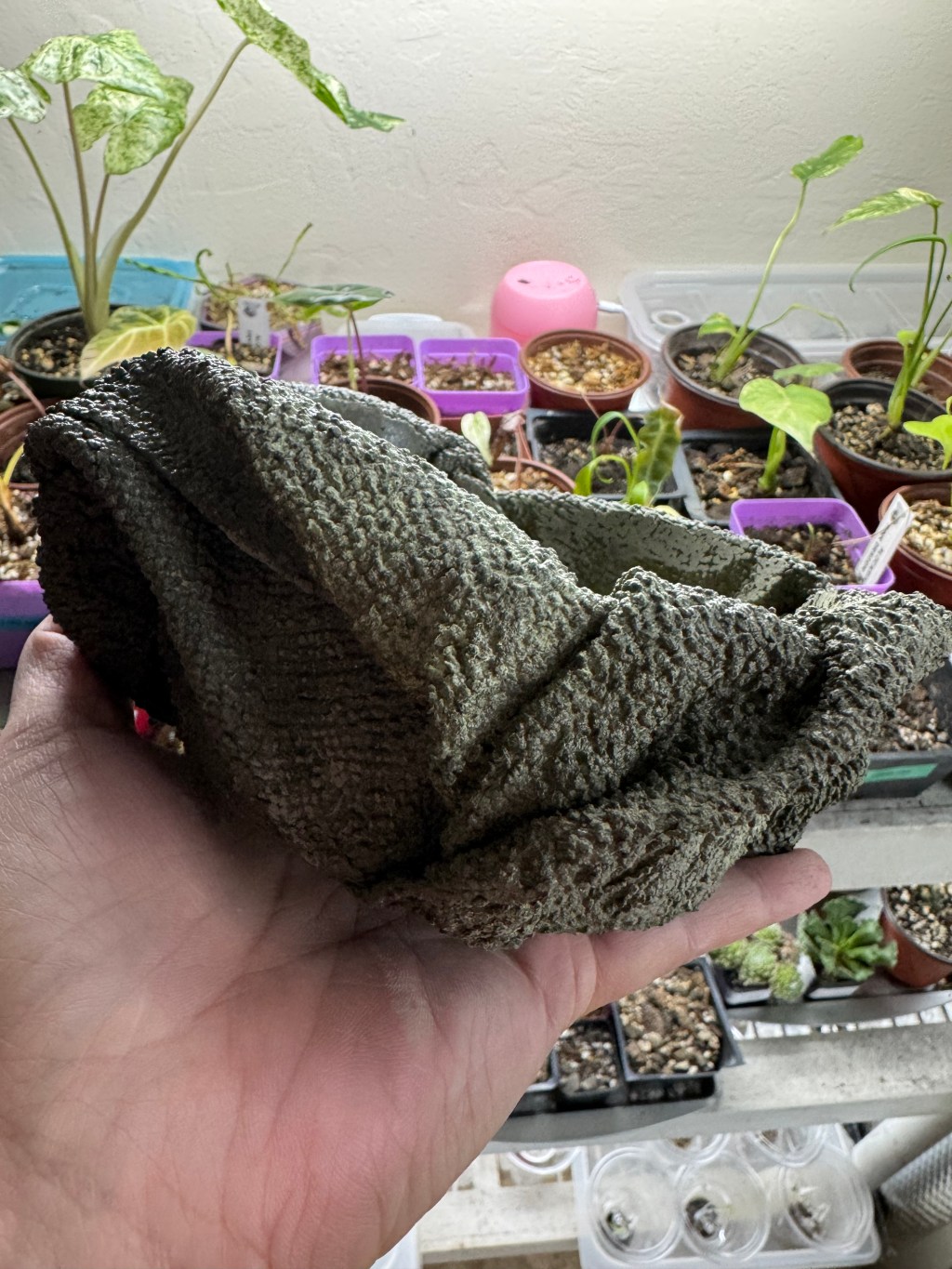
Cement and concrete planters are loved for their clean lines, weight, and modern aesthetic. However, despite their popularity, cement planters are not ideal for planting directly—especially for indoor plants.
This is exactly why I intentionally offer my cement planters as cache pots without drainage holes, designed to be used with a plant’s existing nursery pot rather than replacing it. This method protects plant health while still delivering the look of a cement planter.
Why Cement Planters Aren’t Recommended for Direct Planting
1. Cement Is Naturally Alkaline
Cement contains lime-based compounds that slowly leach into potting mix when exposed to moisture. Over time, this causes soil pH to rise.
Many indoor plants—especially aroids like Monstera, Philodendron, Anthurium, and Alocasia—prefer slightly acidic soil. When soil becomes too alkaline:
- Iron and manganese become unavailable
- Leaves may yellow or pale
- Growth slows and plants weaken
2. Cement Is Porous and Continues to Leach Over Time
Even sealed or painted cement remains microscopically porous. Water moves through the planter walls, carrying minerals into the soil.
Decorative acrylic paint improves appearance, but it:
- Is water-resistant, not waterproof
- Does not permanently block alkalinity
- Breaks down over time with regular watering
This makes cement planters unreliable for long-term plant health when used for direct planting indoors.
3. Indoor Conditions Make the Problem Worse
Outdoors, rain naturally flushes excess minerals from soil. Indoors, there is no such flushing.
As a result:
- Alkalinity and salts accumulate faster
- Smaller planters show problems sooner
- Decline often appears “mysterious” or unrelated to care
Why I Offer Cement Planters as Cache Pots Without Drainage Holes
Rather than selling cement planters for direct planting, I offer them as decorative cache pots—and this is intentional.
What Is a Cache Pot?
A cache pot is an outer decorative container designed to hold a plant in its original nursery pot.
This setup:
- Prevents cement from contacting soil
- Maintains proper drainage and aeration
- Protects roots from pH changes
- Makes plant care simpler and safer
How to Use a Cement Cache Pot Correctly
Step 1: Keep the Plant in Its Nursery Pot
Always leave your plant in a plastic nursery pot with drainage holes. This allows excess water to escape and keeps the soil chemistry stable.
Step 2: Add Rocks or Pebbles to the Cache Pot
Place a layer of rocks, pebbles, or pot risers at the bottom of the cement planter.
This:
- Elevates the nursery pot
- Prevents the plant from sitting in water
- Improves airflow at the base
Step 3: Place the Potted Plant Inside the Cement Planter
Set the nursery pot on top of the rocks or pebbles. After watering:
- Allow the plant to drain fully
- Empty any excess water from the cache pot as needed
Benefits of Using Cement Planters as Cache Pots
Using cement planters this way:
- Eliminates alkalinity and leaching risks
- Reduces plant stress and nutrient issues
- Makes repotting and plant upgrades easy
- Extends the life of both the plant and the planter
- Is ideal for indoor plants and aroids
This method is widely used by professional growers, interior stylists, and serious plant collectors.
Common Issues This Setup Helps Prevent
- Yellowing leaves with green veins
- Weak or slow growth
- Root rot from trapped water
- Confusing nutrient deficiencies
- Early plant decline blamed on “care mistakes”
Bottom Line: Designed for Plant Health
Cement planters are beautiful, but they are not biologically neutral containers. By offering my cement planters as drainage-free cache pots, I prioritize long-term plant health while still providing the aesthetic many plant lovers want.
Keeping plants in their nursery pots and placing them inside cement planters is the safest, most reliable way to enjoy both healthy plants and beautiful design.
 VIOLET POT DESIGNS
Leave a comment