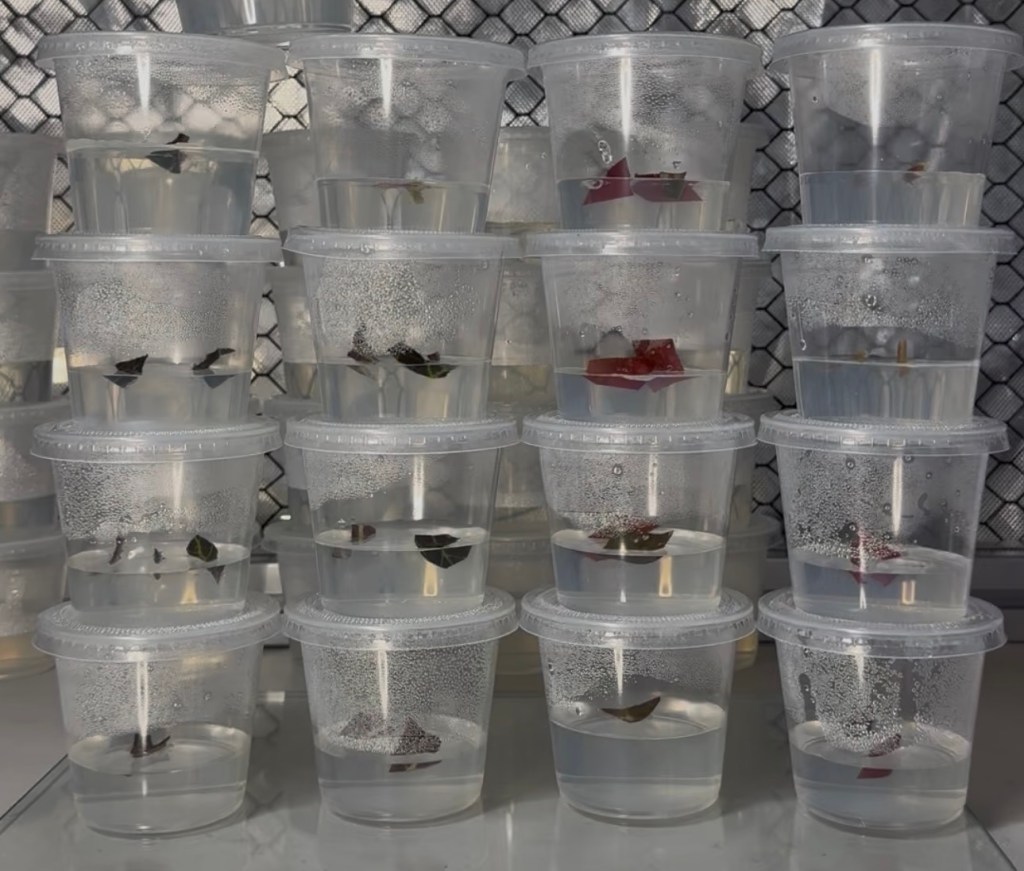
Begonias are among the most responsive ornamental plants in tissue culture, which makes them a great choice for learning micropropagation. Leaf sections, petioles, stem tissue, and other explants can all be used successfully depending on the species or cultivar.
If you are looking for a simple starting point, this Begonia tissue culture multiplication media recipe provides a practical baseline for encouraging shoot initiation and multiplication.
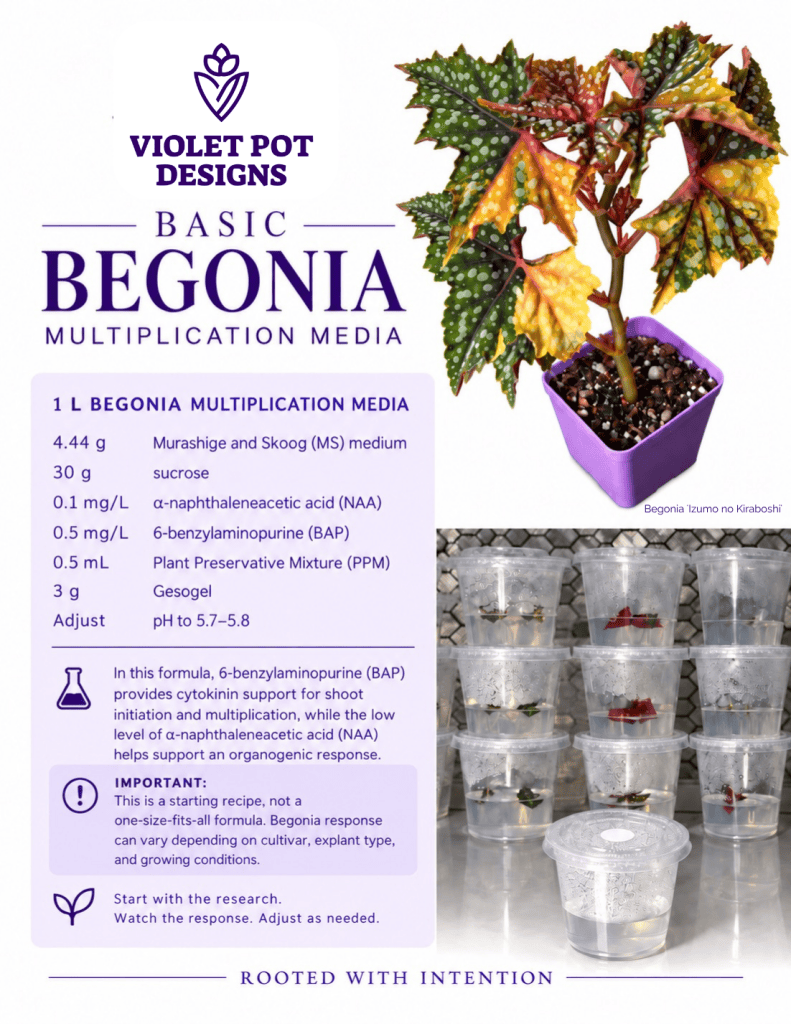
1 Liter Basic Begonia Multiplication Media Recipe
For 1 liter of tissue culture medium:
- 4.44 g Murashige and Skoog (MS) Medium
- 30 g Sucrose
- 0.1 mg α-naphthaleneacetic acid (NAA)
- 0.5 mg 6-benzylaminopurine (BAP)
- 0.5 mg Plant Preservative Mixture (PPM)
- 3 g Gesogel
- Adjust pH to 5.7–5.8
Bring the final volume to 1 liter with distilled water before sterilization.
Why Use BAP and NAA for Begonia Tissue Culture?
6-benzylaminopurine (BAP) is a cytokinin commonly used in plant tissue culture to promote shoot initiation and shoot multiplication.
α-naphthaleneacetic acid (NAA) is an auxin. In this formula, it is used at a lower concentration than BAP to help support an organogenic response while keeping the hormone balance weighted toward shoot production.
That cytokinin-dominant balance is one reason BAP and NAA are commonly used together in Begonia micropropagation research.
What Begonia Explants Can Be Used?
Depending on the species and cultivar, Begonias can regenerate from several types of explants, including:
- leaf sections
- petioles
- stem tissue
- thin cell layer explants
- floral stalk tissue
Leaf and petiole explants are especially popular because Begonia tissue can be highly responsive to adventitious shoot formation.
For leaf tissue, healthy and actively growing material is generally preferable to old, damaged, or senescing leaves.
What Does Successful Begonia Multiplication Look Like?
Early signs of successful regeneration may include:
- swelling around cut edges
- thickening along veins
- small green bumps or bud initials
- clusters of adventitious shoots
The exact timing can vary significantly by cultivar, explant type, and culture conditions. Some Begonias may begin showing visible shoot initiation within a few weeks, while others may take longer.
Why This Recipe Is a Starting Point
There is no single universal Begonia tissue culture recipe.
Begonia response can vary based on:
- cultivar
- explant type
- age and condition of donor tissue
- light intensity
- culture temperature
- plant growth regulator concentration
- subculture timing
This recipe is best treated as a baseline for testing and optimization, not as a guaranteed formula for every Begonia.
A good tissue culture workflow is:
Start with the research. Watch the response. Adjust as needed.
ROOTED WITH INTENTION.
 Violet Pot Designs
Leave a comment